

If you support the Keystone Pipeline...f*ck YOU!
Forum rules
Please read the Community Guidelines before posting.
Please read the Community Guidelines before posting.
-
Funkyterrance

- Posts: 2494
- Joined: Wed Jan 19, 2011 10:52 pm
- Gender: Male
- Location: New Hampshire, USA
Re: If you support the Keystone Pipeline...f*ck YOU!
Dagip, what do you think silicone implants are made from? Black, sticky, petroleum, of course.

-
Lord Arioch

- Posts: 1351
- Joined: Wed Feb 20, 2013 6:43 am
- Gender: Male
- Location: Mostly at work
Re: If you support the Keystone Pipeline...f*ck YOU!
I belive sweden and the adjecant coutnries might have the best water in the world...
So build your stupid pipeline! And when your water is fu#¤%ed buy from us we need the income taxes taxes taxes
So build your stupid pipeline! And when your water is fu#¤%ed buy from us we need the income taxes taxes taxes

Re: If you support the Keystone Pipeline...f*ck YOU!
Army of GOD wrote:This thread is now about my large penis

-
jimboston

- Posts: 5379
- Joined: Tue Sep 11, 2007 2:45 pm
- Gender: Male
- Location: Boston (Area), Massachusetts; U.S.A.
Re: If you support the Keystone Pipeline...f*ck YOU!
So I think the Keystone Pipeline is bad for two reasons.
1) The pipeline will be moving Shale Oil.
(Please correct me if I am wrong... but it's Shale Oil at the source, right?)
The process of extracting Shale Oil requires A LOT of water. I just don't think it's a good trade. The process also creates unstable ground, and though there is debate, there is some evidence that this process can increase the likelihood of earthquakes in some areas with unstable ground or fault lines.
2) The the Oil would benefit the economy in the short term, the last thing we need to do right now is increase our dependence on Fossil Fuels. I'm not proposing we stop all drilling immediately. I am suggesting we take the long term view, and invest in cleaner sources of energy. Climate change is real.
1) The pipeline will be moving Shale Oil.
(Please correct me if I am wrong... but it's Shale Oil at the source, right?)
The process of extracting Shale Oil requires A LOT of water. I just don't think it's a good trade. The process also creates unstable ground, and though there is debate, there is some evidence that this process can increase the likelihood of earthquakes in some areas with unstable ground or fault lines.
2) The the Oil would benefit the economy in the short term, the last thing we need to do right now is increase our dependence on Fossil Fuels. I'm not proposing we stop all drilling immediately. I am suggesting we take the long term view, and invest in cleaner sources of energy. Climate change is real.
-
jimboston
- Posts: 5379
- Joined: Tue Sep 11, 2007 2:45 pm
- Gender: Male
- Location: Boston (Area), Massachusetts; U.S.A.
Re: If you support the Keystone Pipeline...f*ck YOU!
DaGip wrote:
South Dakota also makes ethanol fuel. Maybe we need to focus more on biofuels?
Ethanol is not efficient.
It requires a shit ton of water and land.
The idea of Ethanol is all smoke and mirrors.
-
jimboston
- Posts: 5379
- Joined: Tue Sep 11, 2007 2:45 pm
- Gender: Male
- Location: Boston (Area), Massachusetts; U.S.A.
Re: If you support the Keystone Pipeline...f*ck YOU!
Funkyterrance wrote:I kindof don't oppose any of it. I think it's a little snoody to oppose any progress, whether it affects you personally or not. We are simply too short-sited as a race to prevent this sort of thing. Let the spice flow!
I MAY agree that it's generally dumb to oppose progress.
I don't think continued investment in fossil fuels is progress.
Progress is finding alternative fuels, and/or finding ways to use our current supply more efficiently.
-
jimboston
- Posts: 5379
- Joined: Tue Sep 11, 2007 2:45 pm
- Gender: Male
- Location: Boston (Area), Massachusetts; U.S.A.
Re: If you support the Keystone Pipeline...f*ck YOU!
patches70 wrote:Hahah, worried about a pipeline through your neighborhood but ignore that the oil is already going through your neighborhood anyway! All the oil is being moved anyway without the pipeline, moved by rail mostly. A more expensive mode of transportation and more dangerous than a pipeline.
You are right that a pipeline is more efficient and better for the environment than trucks or rail.
The problem is that if you give in to the pipeline, you just open the faucet and make it a lot easier for us to burn more cheap fossil fuels. I'd agree to the pipeline if we could stop a comparable amount of oil flowing via rail/truck... but very little of the existing transportation methods would stop. You might have a small temporary drop... but nothing compared to how much you move via pipe.
-
jimboston
- Posts: 5379
- Joined: Tue Sep 11, 2007 2:45 pm
- Gender: Male
- Location: Boston (Area), Massachusetts; U.S.A.
Re: If you support the Keystone Pipeline...f*ck YOU!
DaGip wrote:So, risking war with the Lakota Nation is worth forcing your pipeline down our mouths?
There is no such thing as the Lakota Nation.
Even if there was, the idea that any action they could take would be called a "war" is ridiculous.
I know this is WAY OFF TOPIC... but the whole reservation system in the US is crap.
The idea that Native Americans can form truly independent nations is a joke, and has only hurt these people for the past 150 years. Yeah, what early American Settlers did was wrong, what the US Gov't did was wrong. It's done. Get over it.
DaGip wrote:On top of that, many farmers will be forced to let the pipeline through their fields.
A pipeline crossing a corn field is not going to hurt the farmer unless there's a leak. They are being paid for the "easement" rights.
That said, I don't think the Gov't should be able to force landowners to allow the easements. I don't like the idea that Keystone can get the Gov't to force an easement by eminent domain. This is a private for-profit enterprise. If it were a clear matter of national security maybe eminent domain should be used... but it's not a security issue.
DaGip wrote:Even worse than that, tar sands are the WORST form of oil...
Yes. It's pretty bad.
-
Bernie Sanders

- Posts: 5105
- Joined: Tue Sep 08, 2015 2:30 pm
Re: If you support the Keystone Pipeline...f*ck YOU!
This oil from Canada is extremely dirty and takes a lot of time to process. The pipeline being proposed is now a no-go.
The pipeline would have made it more possible for this dirty oil to be processed in the Gulf States to be exported to other countries in the world.
Canadian government is receiving a lot of flak from it's own citizens, due to the ecological destruction that this strip mining is causing.
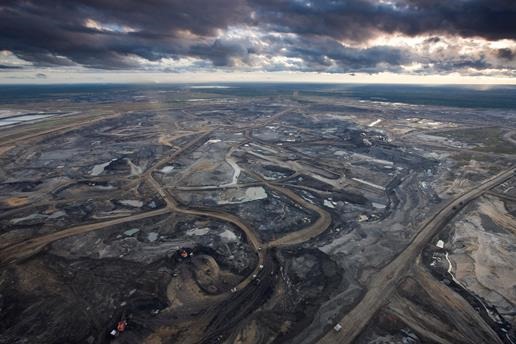
http://www.businessinsider.com/photos-destructive-canada-oil-sands-2012-10
The pipeline would have made it more possible for this dirty oil to be processed in the Gulf States to be exported to other countries in the world.
Canadian government is receiving a lot of flak from it's own citizens, due to the ecological destruction that this strip mining is causing.
http://www.businessinsider.com/photos-destructive-canada-oil-sands-2012-10
Re: If you support the Keystone Pipeline...f*ck YOU!
Bernie Sanders wrote:This oil from Canada is extremely dirty and takes a lot of time to process. The pipeline being proposed is now a no-go.
The pipeline would have made it more possible for this dirty oil to be processed in the Gulf States to be exported to other countries in the world.
Canadian government is receiving a lot of flak from it's own citizens, due to the ecological destruction that this strip mining is causing.
http://www.businessinsider.com/photos-destructive-canada-oil-sands-2012-10

Army of GOD wrote:This thread is now about my large penis


Re: If you support the Keystone Pipeline...f*ck YOU!
jimboston wrote:So I think the Keystone Pipeline is bad for two reasons.
1) The pipeline will be moving Shale Oil.
(Please correct me if I am wrong... but it's Shale Oil at the source, right?)
The process of extracting Shale Oil requires A LOT of water. I just don't think it's a good trade. The process also creates unstable ground, and though there is debate, there is some evidence that this process can increase the likelihood of earthquakes in some areas with unstable ground or fault lines.
Whether the shale oil is extracted was not dependent on the pipeline. It was simply dependent on the world price of oil. Right now the price of oil is down, so many of the shale plants have shut down. But a year ago when the price of oil was high, the shale plants were all at maximum capacity.
Running the pipe would not increase how much shale oil the plants could produce. It would just reduce the cost at which it's being delivered to the final consumer. During times of a very low oil price or a very high oil price it would not have much impact. During times when the price is at the middle of the range there would be some difference.
jimboston wrote:patches70 wrote:Hahah, worried about a pipeline through your neighborhood but ignore that the oil is already going through your neighborhood anyway! All the oil is being moved anyway without the pipeline, moved by rail mostly. A more expensive mode of transportation and more dangerous than a pipeline.
You are right that a pipeline is more efficient and better for the environment than trucks or rail.
The problem is that if you give in to the pipeline, you just open the faucet and make it a lot easier for us to burn more cheap fossil fuels. I'd agree to the pipeline if we could stop a comparable amount of oil flowing via rail/truck... but very little of the existing transportation methods would stop. You might have a small temporary drop... but nothing compared to how much you move via pipe.
Don't know how familiar you are with supply and demand equilibriums. Oil is a product with a relatively inelastic demand curve. Most of the price changes are due to supply constraints. Oil via pipe is slightly cheaper, so it leads to a very small increase in the quantity demanded, but only a very small increase.
Most of the shale oil that is being tapped is already being shipped via rail, as patches pointed out.
jimboston wrote:DaGip wrote:
South Dakota also makes ethanol fuel. Maybe we need to focus more on biofuels?
Ethanol is not efficient.
It requires a shit ton of water and land.
The idea of Ethanol is all smoke and mirrors.
Exactly. What's worse is, ethanol for fuel takes land out of food production, and has an unintended consequence of raising the price of food.
jimboston wrote:2) The the Oil would benefit the economy in the short term, the last thing we need to do right now is increase our dependence on Fossil Fuels. I'm not proposing we stop all drilling immediately. I am suggesting we take the long term view, and invest in cleaner sources of energy. Climate change is real.
Climate change is real, but so are other environmental costs. So-called "clean" sources of energy are not as harmless as they pretend to be.
Every wind turbine, between the concrete pad it sits on, its transmission line, its access road, and its drainage system, takes 4 acres of land. Either that's good pristine wilderness being ruined, or it's good agricultural land being taken out of circulation. Either way, 4 acres per. Good exploitable windy areas are usually also good bird migration paths, and the famous wind farms are referred to as bird cuisinarts. Good solar areas are usually in sensitive desert ecosystems, and for small amounts of energy they remove lots of habitat for desert plants and animals, many of which are threatened to begin with. Both wind and solar require LOTS of metal alloys that burn a lot of energy to manufacture. We clap ourselves on the back for making "clean" energy here in North America, but the alloys for those blade arms solar cells are made with "dirty" energy in China. For a hefty pricetag, we're essentially exporting pollution to China.
Fusion, if it ever arrives, should be mostly clean, but so far despite fifty years of determined research we haven't found the key. Fission is relatively clean, but that's only as long as everything goes well and there's no accidents. There's now been enough nuclear accidents in the world that we can say with some confidence that there will eventually be more.
Hydroelectric has always been the darling of people talking about clean energy, but most people don't know the reality. Where I live, Niagara Falls, is the world's poster child for hydroelectric power. Here we have an enormous flow of water over a relatively big drop in very short distance, and this lucky coincidence has enabled us to create huge hydroelectric plants with relatively little environmental impact. People extrapolate from that and miss the basic fact that there are very few places as lucky as Niagara Falls.
Most hydroelectric projects involve damming up river watersheds, disrupting fish and animal migration paths, and submerging huge areas of land. The James Bay projects in Quebec submerged almost 5,000 square miles of mature forest. You could drop the entire nation of Switzerland into the James Bay reservoirs. Similar stories exist elsewhere. Huge swaths of land lost along the Ob and Yenisei. 500 square miles here, 500 square miles there, and soon it's in the tens of thousands. There are other costs besides environmental. The Ilsu dam in Turkey is going to cost us 400 archaeological sites, including some of the oldest towns on earth.
Tidal forces are enormous, but again, you can't dam the sea without enormous environmental impacts. Using "environmentally friendly" tidal farms (with tidal turbines and bobbing floats and stuff) is not as harmless as it sounds. Fish mortality is significant. There are impacts on oxygen exchange and salinity and acidity, many of which have not yet been studied enough to quantify. Intuitively, however, one is suspicious about the alleged harmlessness of tidal power. All of the other methods discussed above sold themselves as harmless at one time or another.
Really, there's no solution for the environmental cost of energy other than using less of the stuff. There's still some room for improvement there, but as long as the population keeps growing there's ultimately no hope. If we all use 50% less energy, but the population doubles, we're back to where we started. In the meantime, I suppose keeping the price of oil high keeps the pressure on to look for solutions, but moving shale oil around on crash-prone rail cars instead of (relatively) safe pipelines is a poor investment.
“Life is a shipwreck, but we must not forget to sing in the lifeboats.”
― Voltaire
― Voltaire
-
jimboston
- Posts: 5379
- Joined: Tue Sep 11, 2007 2:45 pm
- Gender: Male
- Location: Boston (Area), Massachusetts; U.S.A.
Re: If you support the Keystone Pipeline...f*ck YOU!
Dukasaur wrote:Whether the shale oil is extracted was not dependent on the pipeline.
I understand all of what you are saying.
That said... if you build the pipeline it will impact flow, since once you build the pipeline it has to remain full. Even during times of lower oil prices. When oil prices are lower, then can reduce flow of rail trucks more easily.
In general, I'm looking for less oil.
I'm not saying every pipeline it bad. I am saying this one, based on the fact the source is shale/sand tar oil, it's length, and general opposition; is probably bad.
Dukasaur wrote:Every wind turbine, between the concrete pad it sits on, its transmission line, its access road, and its drainage system, takes 4 acres of land.
Source? That seems extremely high.
I'm guessing that is a high number and there are many factors; including type of turbine, location; type of land it's built on, etc. that would factor into this. I see turbines locally that do not use less tan a quarter acre.
Dukasaur wrote: Either that's good pristine wilderness being ruined, or it's good agricultural land being taken out of circulation.
Not if they are distributed, small batches or located in urban areas. Could be "bad" land too. Deserts? On old landfills?
Dukasaur wrote:Good exploitable windy areas are usually also good bird migration paths, and the famous wind farms are referred to as bird cuisinarts.
This is a problem. There are other problems with turbines. Low-frequency sound vibrations can cause health problems. I'm not saying alternative sources are perfect. I'm saying we need more investment... which includes R&D.
Dukasaur wrote:Good solar areas are usually in sensitive desert ecosystems, and for small amounts of energy they remove lots of habitat for desert plants and animals, many of which are threatened to begin with.
Not necessarily. There are a lot of solar farms sprouting up around me on former landfills and unused (old) cranberry bogs. The land under the panels becomes good ecological wetlands for small wildlife.
Dukasaur wrote:Both wind and solar require LOTS of metal alloys that burn a lot of energy to manufacture. We clap ourselves on the back for making "clean" energy here in North America...
I am not a scientist, I realize thought there are lots of hidden costs. It's not always clear which way is better for the environment. I could use paper-v-plastic bags; or disposable-v-cloth diapers as two examples where the full costs are not usually calculated by most people.
Dukasaur wrote:but the alloys for those blade arms solar cells are made with "dirty" energy in China. For a hefty pricetag, we're essentially exporting pollution to China.
Sounds like a win-lose to me.

We can keep polluting China. I don't care.
I would prefer we re-import the manufacturing to the USA though.
Dukasaur wrote:Fusion, if it ever arrives, should be mostly clean, but so far despite fifty years of determined research we haven't found the key.
OK. Keep researching. Take some of that pipeline money and put it into more research.
Dukasaur wrote:Fission is relatively clean, but that's only as long as everything goes well and there's no accidents. There's now been enough nuclear accidents in the world that we can say with some confidence that there will eventually be more.
Agreed. Still we shouldn't abandon this source.
Dukasaur wrote:Most hydroelectric projects involve damming up river watersheds, disrupting fish and animal migration paths, and submerging huge areas of land. The James Bay projects in Quebec submerged almost 5,000 square miles of mature forest. You could drop the entire nation of Switzerland into the James Bay reservoirs. Similar stories exist elsewhere. Huge swaths of land lost along the Ob and Yenisei. 500 square miles here, 500 square miles there, and soon it's in the tens of thousands. There are other costs besides environmental. The Ilsu dam in Turkey is going to cost us 400 archaeological sites, including some of the oldest towns on earth.
There are other benefits of dams too. They can be used to help increase potable water availability.
Obviously there are impacts and these need to be considered / addressed.
Dukasaur wrote:Tidal forces are enormous, but again, you can't dam the sea without enormous environmental impacts... one is suspicious about the alleged harmlessness of tidal power. All of the other methods discussed above sold themselves as harmless at one time or another.
Agreed.
Dukasaur wrote:Really, there's no solution for the environmental cost of energy other than using less of the stuff. There's still some room for improvement there, but as long as the population keeps growing there's ultimately no hope. If we all use 50% less energy, but the population doubles, we're back to where we started. In the meantime, I suppose keeping the price of oil high keeps the pressure on to look for solutions, but moving shale oil around on crash-prone rail cars instead of (relatively) safe pipelines is a poor investment.
Agreed. Ultimately world population is the driving force.
Though I'm a proponent of higher taxes on energy (all kinds)... with the caveat that that tax money goes towards things like energy research, environmental impact studies, and environmental clean-up / preservation.
Re: If you support the Keystone Pipeline...f*ck YOU!
There was another tanker train derailment yesterday morning in Wisconson. At least 32 tanker cars wrecked next to the Mississippi river eighty miles south of Minneapolis. The train is owned by BNSF, a Warren Buffet company. This is the third tanker train derailment in eight months. How much has spilled is still being determined and a voluntary evacuation of the area is still in effect.
<shrugs>
<shrugs>
Re: If you support the Keystone Pipeline...f*ck YOU!
Blame BNSF for their own safety (safety of the cars, track QA, car and rail design). Don't assume that a pipeline is going to stop derailments. Since the Keystone XL is a goner, this is probably a good time for new transport innovations and safety protocol.
Army of GOD wrote:This thread is now about my large penis
-
Bernie Sanders
- Posts: 5105
- Joined: Tue Sep 08, 2015 2:30 pm
Re: If you support the Keystone Pipeline...f*ck YOU!
They are working on improving tankers. Plus they need to improve the rails where these trains run on.
Re: If you support the Keystone Pipeline...f*ck YOU!
turdbiter wrote:yeah
turdbiter FTW.

Army of GOD wrote:This thread is now about my large penis
Re: If you support the Keystone Pipeline...f*ck YOU!
If you want to benefit from information on a wholesale dealer to import from China or whichever other country, you can take each and every the needful information from the worldwide trade directories easy to get to at the consulates of the country. But, if you do not want to bring to bear yourself, then you can get to the wholesale suppliers in the internet that is an information gold mine. As well as, you must try to way in the catalogs of merchandise.
Thanks& regards,
Angel anave
Importer de Chine |fabricants Chine
Thanks& regards,
Angel anave
Importer de Chine |fabricants Chine

Re: If you support the Keystone Pipeline...f*ck YOU!
Admin010 wrote:If you want to benefit from information on a wholesale dealer to import from China or whichever other country, you can take each and every the needful information from the worldwide trade directories easy to get to at the consulates of the country. But, if you do not want to bring to bear yourself, then you can get to the wholesale suppliers in the internet that is an information gold mine. As well as, you must try to way in the catalogs of merchandise.
Thanks& regards,
Angel anave
Importer de Chine |fabricants Chine
Fuck you!

CONFUSED? YOU'LL KNOW WHEN YOU'RE RIPE
saxitoxin wrote:Serbia is a RUDE DUDE
may not be a PRUDE, but he's gotta 'TUDE
might not be LEWD, but he's gonna get BOOED
RUDE
-
TA1LGUNN3R
- Posts: 2699
- Joined: Sat Jan 24, 2009 12:52 am
- Location: 22 Acacia Avenue

Re: If you support the Keystone Pipeline...f*ck YOU!
Admin010 wrote:If you want to benefit from information on a wholesale dealer to import from China or whichever other country, you can take each and every the needful information from the worldwide trade directories easy to get to at the consulates of the country. But, if you do not want to bring to bear yourself, then you can get to the wholesale suppliers in the internet that is an information gold mine. As well as, you must try to way in the catalogs of merchandise.
Thanks& regards,
Angel anave
Importer de Chine |fabricants Chine
I don't understand this. Reminds me of the english assembly instructions for product made in China.
Mrs, can you prease transrate?

-
ConfederateSS

- Posts: 4057
- Joined: Wed Dec 31, 2008 1:50 pm
- Location: THE CONFEDERATE STATES of AMERICA and THE OLD WEST!
Re: If you support the Keystone Pipeline...f*ck YOU!
--------Curse of Custer...Don't mess with THE SIOUX...ConfederateSS.out!(The Blue and Silver Rebellion)...
-
General_Tao

- Posts: 122
- Joined: Sun May 29, 2011 12:22 am
- Gender: Male
- Location: Montreal
Re: If you support the Keystone Pipeline...f*ck YOU!
Good post Duk. ^^^^
If the sioux won't let the XL Keystone Pipeline through, maybe they'll accept the L or M Keystone Pipeline? Or, it that's what it takes, the S Pipeline? I think Trump is going to draw the line there, the XS is not gonna happen.
If the sioux won't let the XL Keystone Pipeline through, maybe they'll accept the L or M Keystone Pipeline? Or, it that's what it takes, the S Pipeline? I think Trump is going to draw the line there, the XS is not gonna happen.

-
TA1LGUNN3R
- Posts: 2699
- Joined: Sat Jan 24, 2009 12:52 am
- Location: 22 Acacia Avenue
Re: If you support the Keystone Pipeline...f*ck YOU!
General_Tao wrote:Good post Duk. ^^^^
If the sioux won't let the XL Keystone Pipeline through, maybe they'll accept the L or M Keystone Pipeline? Or, it that's what it takes, the S Pipeline? I think Trump is going to draw the line there, the XS is not gonna happen.
Nobody wants to settle for S pipe.
-TG