



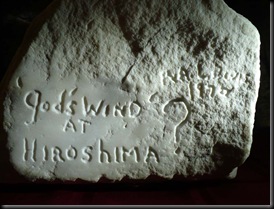
Want to know where that image is from? Check out Phase 8.
History of Nuclear War VII
This is the Sunny counterpart of History of Nuclear War II which focused on the time from the entry of the U.S. into WW II in 1941 until the dropping of nuclear weapons on Hiroshima and Nagasaki.
For more information on this series, visit the History of Nuclear War Series InfoCentre
Eligibility: To play in this tournament, you must be premium, have a turns-taken record of 98% or better, at least 100 completed games, and be at least a PFC on sign-up.
Procedure: In each tourney in this series, the first nine phases will consist of multiplayer Standard games. In each of these phases, only the first player eliminated from each game is eliminated from the tournament. All others will continue to the next phase. As soon as all games in a phase have had one player eliminated, I will begin the next phase with the survivors. Winning these games will not influence the course of the tournament; only that first elimination is significant.
In the Final phase, all remaining players will play simultaneously in nine multiplayer Terminator games. These games will be completed and winning them will count, as will the number of kills.
Settings: All games will be Automatic, Sequential, Chained, Sunny, No Trench, 24 hour. Maps will vary widely from phase to phase. Needless to say, spoils in all games will be Nuclear.
Phase 1
As we covered in History of Nuclear War I, U.S. government participation in nuclear research began in 1939, only two months after the Einstein-Szilard letter was written. Sufficient impetus to spend the enormous funds required to develop a practical nuclear weapon didn't materialize until after the Pearl Harbour attack brought the U.S. officially into WW II.
By June of 1942, the effort was centralized under the U.S. Army. Its initial budget was $54 million, but eventually ballooned to two billion dollars by the end of the war. The first headquarters of the project was at 270 Broadway in Manhattan, and it became known as the Manhattan Engineering District, or "Manhattan Project."
Phase 1
40 players in 5 groups will play 8-player games on the New York City map. The first player eliminated in each game is out of the tournament. The remainder will go on to the next round.
By June of 1942, the effort was centralized under the U.S. Army. Its initial budget was $54 million, but eventually ballooned to two billion dollars by the end of the war. The first headquarters of the project was at 270 Broadway in Manhattan, and it became known as the Manhattan Engineering District, or "Manhattan Project."
Phase 1
40 players in 5 groups will play 8-player games on the New York City map. The first player eliminated in each game is out of the tournament. The remainder will go on to the next round.
Phase 2
On December 2nd, 1942, the world's first self-sustaining nuclear reaction was created at the University of Chicago. Enrico Fermi, the designer of the experiment, was finally able to demonstrate the power of nuclear fission, which he had predicted almost 20 years earlier. A now-famous indicator of the urgency in the effort is that Fermi's reactor was located under the bleachers in the University's football field, because a permanent facility being build for him in the Argonne Forest wasn't ready.
Although the University of Chicago was a major star in the early days of the Manhattan project, it was soon eclipsed. Being focused on mainly theoretical and scientific questions, it steadily lost influence in a Manhattan Project that was mainly concerned with the practical engineering issues involved in building bombs. After the war, the Argonne lab would regain prominence, as a leader in peaceful applications of nuclear energy.
Phase 2
35 players in 5 groups will play 7-player games on the Chicago map. The first player eliminated in each game is out of the tournament. The remainder will go on to the next round.
Although the University of Chicago was a major star in the early days of the Manhattan project, it was soon eclipsed. Being focused on mainly theoretical and scientific questions, it steadily lost influence in a Manhattan Project that was mainly concerned with the practical engineering issues involved in building bombs. After the war, the Argonne lab would regain prominence, as a leader in peaceful applications of nuclear energy.
Phase 2
35 players in 5 groups will play 7-player games on the Chicago map. The first player eliminated in each game is out of the tournament. The remainder will go on to the next round.
Phase 3
By far the largest facility run under the umbrella of the Manhattan Project was the Clinton Engineer Works at Oak Ridge, Tennessee. Here, Uranium-235 was separated from Uranium-238 by a variety of processes, all of which were experimental and needed to be developed and improved "on the fly." The centrifuge method was a failure and was soon abandoned, but electromagnetic separation, gasseous diffusion, and thermal diffusion were all successful to some degree and contributed to the final stockpile of fissionable uranium. By 1945 there were 75,000 people working at Oak Ridge, and the K-25 gasseous diffusion plant was the single largest building on the planet.
Phase 3
30 players in 5 groups will play 6-player games on the USA Southeast map. The first player eliminated in each game is out of the tournament. The remainder will go on to the next round.
Phase 3
30 players in 5 groups will play 6-player games on the USA Southeast map. The first player eliminated in each game is out of the tournament. The remainder will go on to the next round.
Phase 4
The British nuclear effort codenamed "Tube Alloys" was centred at Manchester and Birmingham Universities, but to protect the laboratories from the threat of German bombing, they were moved overseas to Montreal.
The relationship between the Allied efforts went through three phases. Before 1942, there was pretty much open communication between the two teams. In 1942, when the U.S. Army took over the American effort, a portcullis of secrecy slammed down and no communication with the British team was permitted. Then, in 1943, Roosevelt and Churchill signed the Quebec Agreement and full co-operation resumed.
Tube Alloys had absorbed fleeing French scientists, as well as Jewish scientists from Germany, Poland, and Hungary, all fleeing Nazi persecution. It thus had a brilliant talent pool, but what it lacked was resources. Fighting for its life, Britain simply didn't have the cash to mount a programme like the Manhattan Project, or anything remotely close to it in magnitude. Slowly but surely, despite a brilliant start, Tube Alloys became a mere auxiliary to the much larger Manhattan Project.
The ZEEP reactor at Chalk River north of Ottawa was built to produce plutonium for the American bombs, but it was completed too late to perform that role, first going online on September 5th 1945, a week after the war ended. ZEEP did become a world leader in peaceful uses of nuclear energy, and was the prototype for the successful CANDU nuclear design.
Phase 4
25 players in 5 groups will play 5-player games on the Canada map. The first player eliminated in each game is out of the tournament. The remainder will go on to the next round.
The relationship between the Allied efforts went through three phases. Before 1942, there was pretty much open communication between the two teams. In 1942, when the U.S. Army took over the American effort, a portcullis of secrecy slammed down and no communication with the British team was permitted. Then, in 1943, Roosevelt and Churchill signed the Quebec Agreement and full co-operation resumed.
Tube Alloys had absorbed fleeing French scientists, as well as Jewish scientists from Germany, Poland, and Hungary, all fleeing Nazi persecution. It thus had a brilliant talent pool, but what it lacked was resources. Fighting for its life, Britain simply didn't have the cash to mount a programme like the Manhattan Project, or anything remotely close to it in magnitude. Slowly but surely, despite a brilliant start, Tube Alloys became a mere auxiliary to the much larger Manhattan Project.
The ZEEP reactor at Chalk River north of Ottawa was built to produce plutonium for the American bombs, but it was completed too late to perform that role, first going online on September 5th 1945, a week after the war ended. ZEEP did become a world leader in peaceful uses of nuclear energy, and was the prototype for the successful CANDU nuclear design.
Phase 4
25 players in 5 groups will play 5-player games on the Canada map. The first player eliminated in each game is out of the tournament. The remainder will go on to the next round.
Phase 5
While possibly 90% of the expenditure and employment of the Manhattan project was devoted to the manufacture and refining of fissionable materials, the crucial remaining 10% was devoted to the construction and delivery of the bombs themselves. Most of this was done in New Mexico at Los Alamos, the "city in the desert" codenamed Project Y.
The gun-type uranium-based bomb (eventually used at Hiroshima) was considered too simple to fail, and therefore not tested at all prior to use. The implosion-type plutonium based bomb (like the one eventually used at Nagasaki) was far more complex, and the bomb designers felt it had to be tested. Thus, on July 16th, 1945, the worlds first man-made nuclear detonation occurred at the Alamogordo Bombing Range near San Antonio.
Phase 5
20 players in 4 groups will play 5-player games on the USA Southwest map. The first player eliminated in each game is out of the tournament. The remainder will go on to the next round.
The gun-type uranium-based bomb (eventually used at Hiroshima) was considered too simple to fail, and therefore not tested at all prior to use. The implosion-type plutonium based bomb (like the one eventually used at Nagasaki) was far more complex, and the bomb designers felt it had to be tested. Thus, on July 16th, 1945, the worlds first man-made nuclear detonation occurred at the Alamogordo Bombing Range near San Antonio.
Phase 5
20 players in 4 groups will play 5-player games on the USA Southwest map. The first player eliminated in each game is out of the tournament. The remainder will go on to the next round.
Phase 6
The Manhattan Project was initiated with the idea of fighting the war against Germany. However, the Project took so long and the conventional war proceeded so quickly that Germany had already surrendered 10 weeks before the first bomb was tested.
Phase 6
16 players in 2 groups will play 8-player games on the WW II Western Front map. The first player eliminated in each game is out of the tournament. The remainder will go on to the next round.
Phase 6
16 players in 2 groups will play 8-player games on the WW II Western Front map. The first player eliminated in each game is out of the tournament. The remainder will go on to the next round.
Phase 7
With Germany and Italy out of the war, Japan continued to fight, and nuclear bombs were preparared for use against Japan.
There are those who say that Germany's exit from the war simplified the decision to use the bomb -- that use of such a terrible weapon was made easier by the fact that it was to be used against Asians rather than Europeans. It is unclear how true this allegation might be.
On the one hand, Allied air forces certainly weren't gentle with Germany. Over 3,000,000 tons of conventional bombs had been dropped on Europe, resulting in a million German casualties (1/4 of a million dead and 3/4 of a million injured) and probably another 300,000 casualties in German-occupied areas of other countries.
On the other hand, it is true that there were racist overtones to the war against Japan that weren't present in the against Germany. In both the U.S. and Canada, Japanese citizens were interned, while German and Italian citizens were assumed to be loyal unless proven otherwise.
According to the wikipedia article
Phase 7
14 players in 2 groups will play 7-player games on the WWII Australia map. The first player eliminated in each game is out of the tournament. The remainder will go on to the next round.
There are those who say that Germany's exit from the war simplified the decision to use the bomb -- that use of such a terrible weapon was made easier by the fact that it was to be used against Asians rather than Europeans. It is unclear how true this allegation might be.
On the one hand, Allied air forces certainly weren't gentle with Germany. Over 3,000,000 tons of conventional bombs had been dropped on Europe, resulting in a million German casualties (1/4 of a million dead and 3/4 of a million injured) and probably another 300,000 casualties in German-occupied areas of other countries.
On the other hand, it is true that there were racist overtones to the war against Japan that weren't present in the against Germany. In both the U.S. and Canada, Japanese citizens were interned, while German and Italian citizens were assumed to be loyal unless proven otherwise.
According to the wikipedia article
In Australia, the entire British stockpile of poison gas leftover from WW I was brought in, to be used if Japanese forces successfully landed on Australian soil. This was "justified" because Japan had never signed the Geneva Conventions and was not protected by the ban on poison gas.During the war "annihilationist and exterminationalist rhetoric" was tolerated at all levels of U.S. society; according to the UK embassy in Washington the Americans regarded the Japanese as "a nameless mass of vermin".[90] Caricatures depicting Japanese as less than human, e.g. monkeys, were common.[90] A 1944 opinion poll that asked what should be done with Japan found that 13% of the U.S. public were in favor of the extermination of all Japanese: men, women, and children.[91][92]
Phase 7
14 players in 2 groups will play 7-player games on the WWII Australia map. The first player eliminated in each game is out of the tournament. The remainder will go on to the next round.
Phase 8
On August 6th, 1945, the Enola Gay, piloted by Colonel Paul Tibbets, dropped the "Little Boy" uranium-based bomb on Hiroshima, Japan. This is the date authors generally refer to as "the start of the Atomic Age" although of course the beginning of an Age is a gradual process, as we have seen in this tournament and the previous one.
70% of Hiroshima was levelled by the blast, and 70,000 people were killed. More died afterward from radiation poisoning and radiation-related illnesses. The total death toll has been variously estimated between 90,000 and 200,000.
At the time, most people in the U.S. and other Allied nations were unequivocally in favour of of the atomic strike, although with the passage of time more and more people have come to question it.
Tibbets and the crew were for the most part proud of their role, although privately some had lingering doubts. Co-pilot Robert A. Lewis has become known for his soul-searching art.
Phase 8
12 players in 2 groups will play 6-player games on the Japan map. The first player eliminated in each game is out of the tournament. The remainder will go on to the next round.
70% of Hiroshima was levelled by the blast, and 70,000 people were killed. More died afterward from radiation poisoning and radiation-related illnesses. The total death toll has been variously estimated between 90,000 and 200,000.
At the time, most people in the U.S. and other Allied nations were unequivocally in favour of of the atomic strike, although with the passage of time more and more people have come to question it.
Tibbets and the crew were for the most part proud of their role, although privately some had lingering doubts. Co-pilot Robert A. Lewis has become known for his soul-searching art.
Phase 8
12 players in 2 groups will play 6-player games on the Japan map. The first player eliminated in each game is out of the tournament. The remainder will go on to the next round.
Phase 9
On August 9th, the plutonium-based "Fat Man" bomb was dropped on Nagasaki. The original target had actually been the city of Kokura, but smoke and cloud obscured the target. After three attempts to approach Kokura and make a visual sighting, the B-29 continued on to the secondary target, Nagasaki. Fuel was running low and serious consideration was given to ditching the bomb in the sea and going home. The mission has been called the Mission That Almost Failed.
Phase 9
10 players in 2 groups will play 5-player games on the Japan map. The first player eliminated in each game is out of the tournament. The remainder will go on to the next round.
Phase 9
10 players in 2 groups will play 5-player games on the Japan map. The first player eliminated in each game is out of the tournament. The remainder will go on to the next round.
Phase 10 - Finals - The nuclear cataclysm
Phase 10: The nuclear cataclysm
In the final round, the eight remaining players will face off simultaneously on all nine maps used in the tournament thus far. (The Japan map, which was used in two phases thus far, will therefore be played twice.) These games will be Terminator, and players will score 1 point for each kill and two extra points for winning a game. The player who scores the most points in the Cataclysm phase will win the tournament.
In the final round, the eight remaining players will face off simultaneously on all nine maps used in the tournament thus far. (The Japan map, which was used in two phases thus far, will therefore be played twice.) These games will be Terminator, and players will score 1 point for each kill and two extra points for winning a game. The player who scores the most points in the Cataclysm phase will win the tournament.





 _Member__





_elvis.jpg?width=450&height=278&crop=fill)